
How to Choose Window Tint for Premium Vehicle Protection

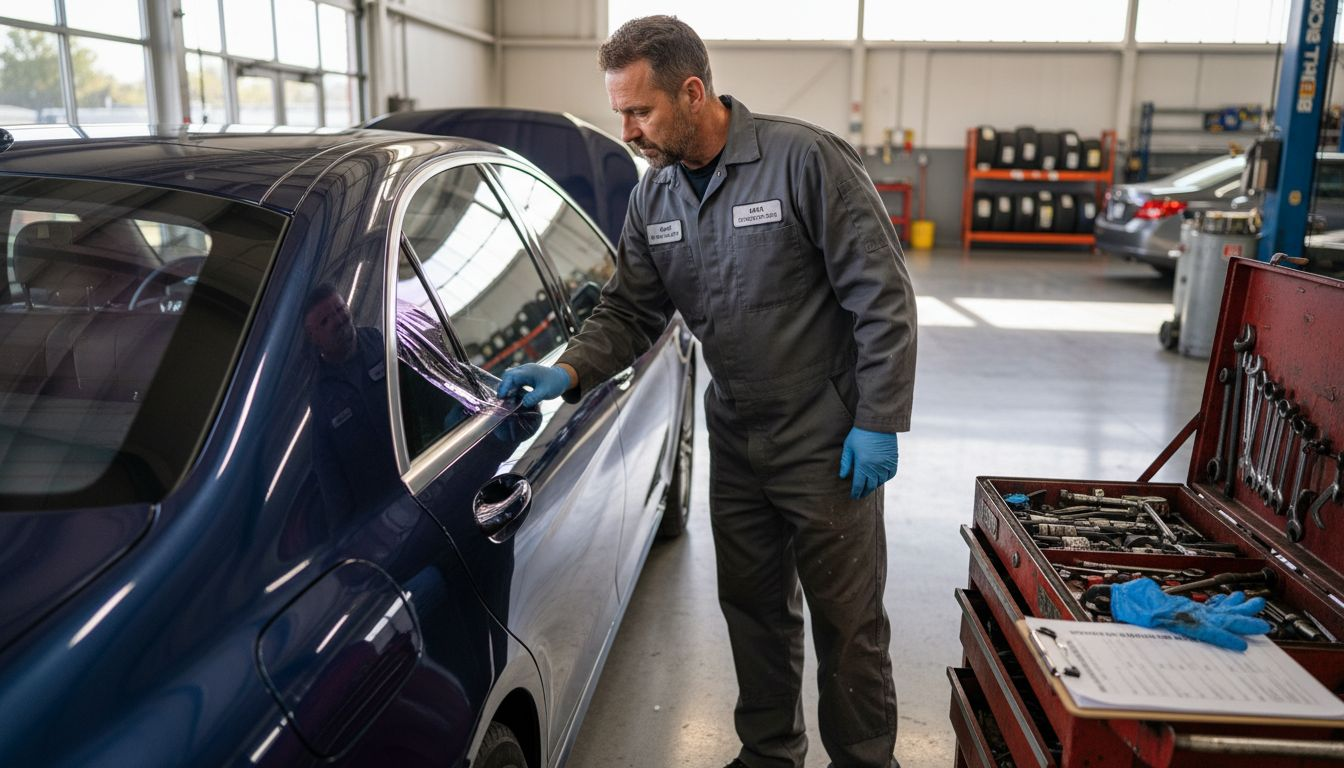
Discerning luxury car owners in Spokane know that choosing the right ceramic window tint demands more than just style. Balancing aesthetics and UV protection means navigating complex regulations and film technologies tailored to suit premium vehicles. For those seeking flawless installation, clarity, and lasting protection, understanding each step of the process empowers you to safeguard your investment while maintaining a striking look. Attention to detail is your greatest asset in achieving a legal, beautiful result.
Table of Contents
Quick Summary
Key Insight | Explanation |
1. Assess Vehicle’s Tint Needs | Evaluate your vehicle’s specifications and legal requirements before selecting a tint. |
2. Compare Film Types | Understand the different window film types to choose the best balance of aesthetics and performance. |
3. Know Local Tint Regulations | Familiarize yourself with local laws regarding window tint to ensure compliance and safety. |
4. Choose Certified Installers | Select professionals with certifications to guarantee quality installation and expertise. |
5. Inspect Installation Quality | Perform a thorough inspection after installation to verify quality and catch any issues early. |
Step 1: Assess Your Vehicle’s Tinting Needs
Choosing the right window tint involves carefully evaluating your specific vehicle requirements and understanding legal parameters. Modern vehicle owners need a strategic approach that balances aesthetic preferences with practical protection needs.
Start by examining your vehicle type and its unique characteristics. Different vehicles have varying window sizes and configurations that impact tint selection. Sedans, SUVs, and luxury vehicles each present unique challenges when applying window film. Most critically, you must consider federal light transmittance regulations, which mandate that essential driving windows maintain at least 70% light visibility to ensure safety.
Your assessment should include several key considerations: local legal restrictions, your primary driving environment, vehicle usage, and personal protection goals. Urban drivers might prioritize heat rejection, while those in scenic areas may want minimal visual interference. Medical conditions can also qualify for special tinting exemptions, providing additional flexibility in window film selection.
Pro Tip: Always consult a professional automotive tinting specialist who can provide personalized recommendations based on your specific vehicle and local regulations.
Step 2: Compare Film Types and Features
Comparing window tint film types is crucial for selecting the optimal protection and aesthetic solution for your luxury vehicle. Your choice will directly impact your driving experience, vehicle appearance, and long-term protection strategy.
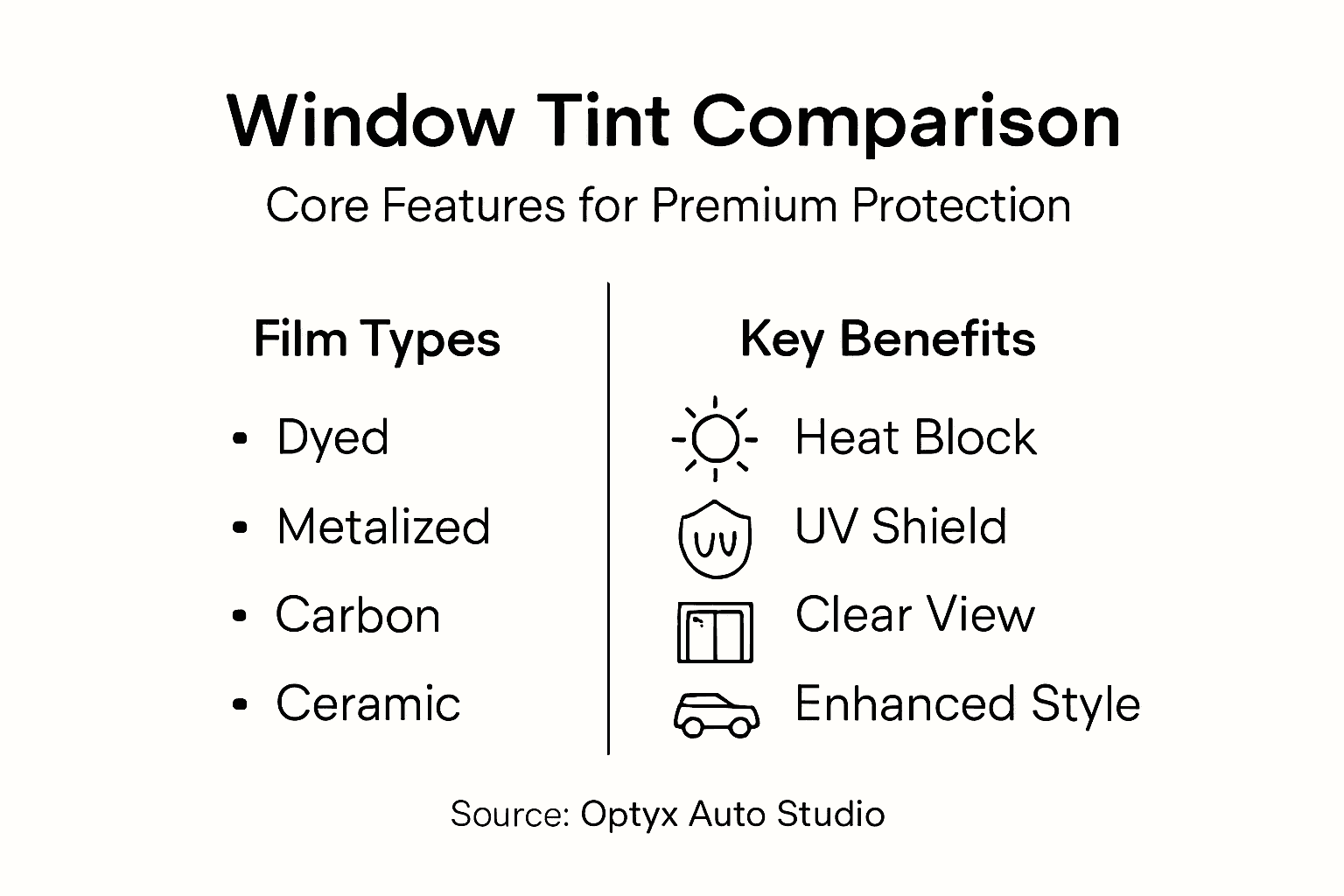
Window films typically fall into four primary categories: dyed, metalized, carbon, and ceramic. Each type offers unique characteristics that cater to different performance requirements. Dyed films provide basic aesthetic darkening and minimal heat rejection, while metalized films offer enhanced reflectivity and durability. Carbon films represent a mid tier option with improved heat reduction and a matte finish. Ceramic window tints emerge as the premium choice, delivering superior heat rejection, UV protection, and optical clarity without compromising visibility.
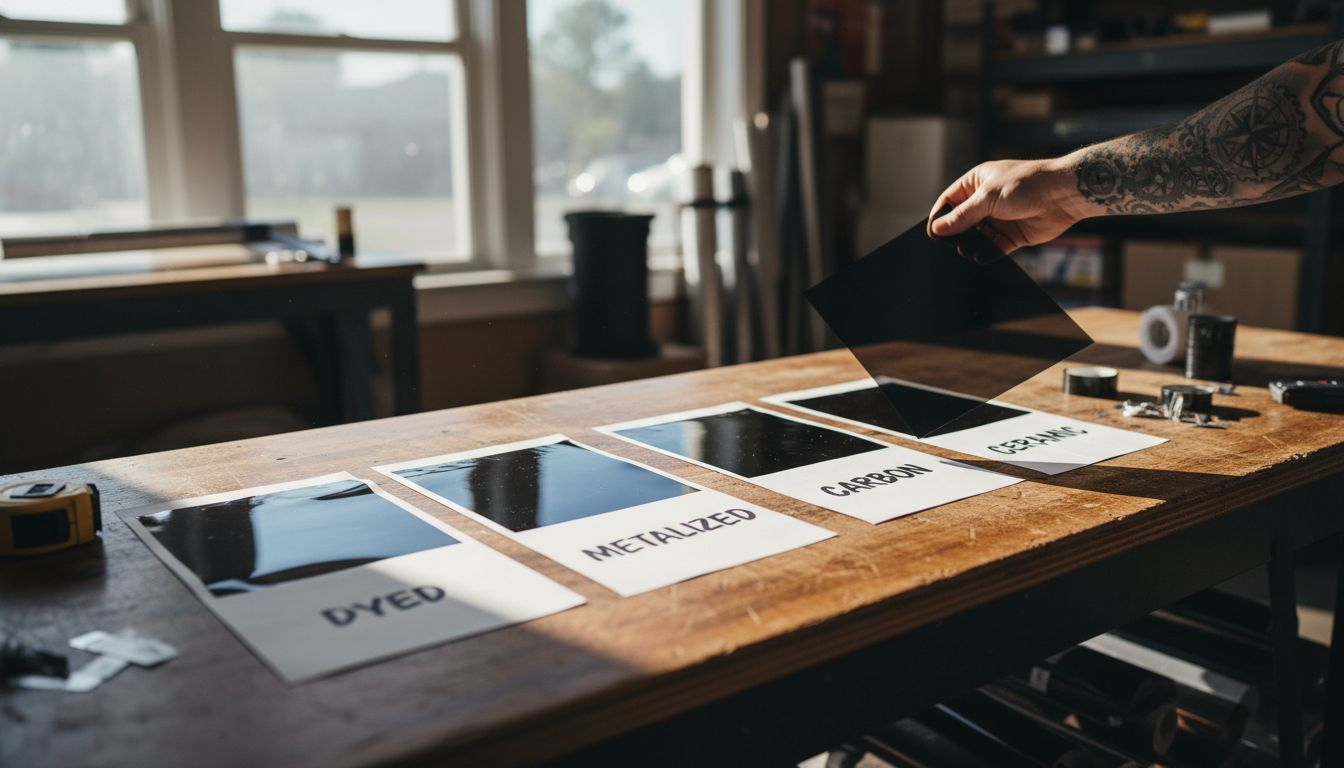
When evaluating film types, consider your specific priorities. Urban drivers might prioritize heat reduction, while those seeking pristine aesthetics may focus on optical clarity and color stability. Performance characteristics like infrared rejection, visible light transmission, and solar energy reduction should guide your selection process.
Consider these quick vehicle scenarios based on common tinting priorities:
Scenario | Main Priority | Recommended Film Type |
Hot urban summers | Maximum cooling | Ceramic |
Style focused | Sleek appearance | Carbon |
Basic sun shading | Low cost option | Dyed |
Durability needed | Long-lasting | Metalized |
Here’s how the main window tint types compare in key performance categories:
Film Type | Heat Rejection | UV Protection | Aesthetic Finish |
Dyed | Low | Basic | Tinted, darker look |
Metalized | Moderate | Good | Slightly reflective |
Carbon | High | Excellent | Matte, non-reflective |
Ceramic | Superior | Outstanding | Crystal clear, color-stable |
Pro Tip: Request sample swatches from your tinting professional to visually compare film performance and appearance under different lighting conditions.
Step 3: Review Legal Standards and Recommendations
Understanding window tinting regulations is critical for ensuring your vehicle modification remains both legally compliant and aesthetically pleasing. Navigating the complex landscape of local and state tinting laws requires careful research and professional guidance.
Each state maintains unique vehicle window tint regulations that specify precise requirements for visible light transmission (VLT), reflectivity, and permissible tint levels across different vehicle windows. These standards vary significantly between jurisdictions, with some states allowing darker rear window tints while maintaining stricter regulations on front side and windshield windows. Medical exemptions can provide additional flexibility, allowing individuals with specific health conditions to obtain tint variations typically not permitted under standard guidelines.
To remain compliant, you should contact your local Department of Motor Vehicles or law enforcement agency to confirm current regulations. Consider consulting a professional window tinting specialist who understands the nuanced legal requirements in your specific region. They can provide expert guidance on selecting films that meet both your aesthetic preferences and legal standards.
Pro Tip: Always request a written certification of your window tint installation to document compliance with local regulations.
Step 4: Consult Certified Installers for Expert Advice
Selecting the right window tinting professional is crucial to ensuring a flawless installation that meets your vehicle protection and aesthetic goals. Your choice of installer will directly impact the quality, durability, and compliance of your window film.
Seek out professionals affiliated with the International Window Film Association who demonstrate proven expertise and commitment to industry standards. Certified installers bring specialized knowledge about film types, application techniques, and local regulatory requirements. They can provide personalized recommendations based on your specific vehicle model, driving conditions, and protection needs.
When evaluating potential installers, request proof of certification, review their portfolio of previous work, and ask detailed questions about their installation process. Look for professionals who can demonstrate expertise in ceramic tinting technologies, understand local legal restrictions, and offer comprehensive warranties. A reputable installer will not only apply your window film with precision but also guide you through selecting the optimal film for your unique requirements.
Pro Tip: Request to see before and after photos of previous installations and ask about their quality control process to ensure you receive a premium window tinting experience.
Step 5: Verify Film Quality and Installation Results
Evaluating the quality of your window tint installation requires a systematic and precise approach to ensure you receive a premium automotive enhancement. Your careful inspection will help identify the craftsmanship and attention to detail of the professional installation.
Utilize window film installation quality guidelines to perform a comprehensive assessment. Inspect the film in natural daylight from a standard viewing distance, looking for consistent color, smooth edges, and minimal visual imperfections. Small particles or minor bubbles are typically acceptable, but significant irregularities like large air pockets, misaligned edges, or uneven coloration indicate substandard work.
Pay close attention to key areas such as window corners, edges, and curved surfaces where installation precision is most challenging. Check for clean, crisp film edges that align perfectly with window frames, uniform color saturation, and zero signs of peeling or lifting. Request a detailed walkthrough from your installer, asking them to explain their quality control process and demonstrate the film’s performance characteristics.
Pro Tip: Schedule a follow-up inspection within one week of installation to catch any potential issues that might develop during the initial curing period.
Elevate Your Vehicle Protection with Expert Ceramic Window Tinting
Choosing the right window tint for premium vehicle protection is no simple task. This article highlights the challenges of balancing UV protection, heat rejection, and legal compliance while preserving your vehicle’s appearance and safety. If you want to avoid common pitfalls like uneven installation or noncompliance with local regulations, professional-grade solutions and certified installers are vital.
At Optyx Auto Studio, we specialize in advanced ceramic window tinting that meets strict legal standards and delivers superior heat and UV rejection. Our expert team understands the importance of precise application techniques to minimize visible film edges and ensure long-lasting durability. Whether you prioritize enhanced comfort during hot urban drives or a sleek, crystal-clear finish, our premium services are tailored to your vehicle’s unique needs.
Discover the difference with our detail-oriented approach and over 35 years of experience. Don’t settle for subpar tinting jobs that compromise your vehicle’s protection and style. Visit Optyx Auto Studio today to explore our full range of ceramic window tinting solutions and benefit from our certified installers who guarantee flawless results.
Ready to protect your vehicle while enhancing its aesthetic appeal? Contact us now at Optyx Auto Studio and take the first step toward a professionally restyled, legally compliant, and truly premium window tint experience.
Frequently Asked Questions
How do I assess my vehicle’s tinting needs?
To assess your vehicle’s tinting needs, start by evaluating your vehicle type and its specific window characteristics. Consider local legal restrictions, your primary driving environment, and personal protection goals, such as heat reduction or privacy. Make a list of priorities to help guide your selection.
What are the different types of window tint films?
The four main types of window tint films are dyed, metalized, carbon, and ceramic. Each type offers varying levels of heat rejection, UV protection, and aesthetic appeal. Compare their features to find the best fit for your needs, keeping in mind your priorities like durability or visual clarity.
How can I ensure my window tint complies with local regulations?
To ensure your window tint complies with local regulations, research the specific vehicle window tint laws in your area. Contact your local Department of Motor Vehicles or a professional window tinting specialist for guidance on acceptable levels of visible light transmission and reflectivity for each window.
What should I look for in a certified window tint installer?
When choosing a certified window tint installer, look for professionals affiliated with a recognized industry organization. Request proof of certification, review their work portfolio, and ask about their installation process to ensure they provide quality service and proper adherence to local regulations.
How do I verify the quality of my window tint installation?
To verify the quality of your window tint installation, conduct a systematic inspection of the film in natural daylight. Check for consistent color, smooth edges, and minimal imperfections, being particularly attentive to corners and edges. Schedule a follow-up inspection within one week to address any potential issues while the film is still curing.
Recommended


Comments